
Archaeo-optics
Archaeo-Optics:
Light, Projection, & Perception in Prehistoric Monuments
Through experimental fieldwork at Neolithic chambered cairns and passage graves, this research reveals how narrow entrances and carefully positioned openings can generate vivid optical effects and moving images. By examining how these phenomena were experienced rather than merely observed, archaeo-optics opens new ways of understanding how light, architecture, and belief intersected in the prehistoric world.
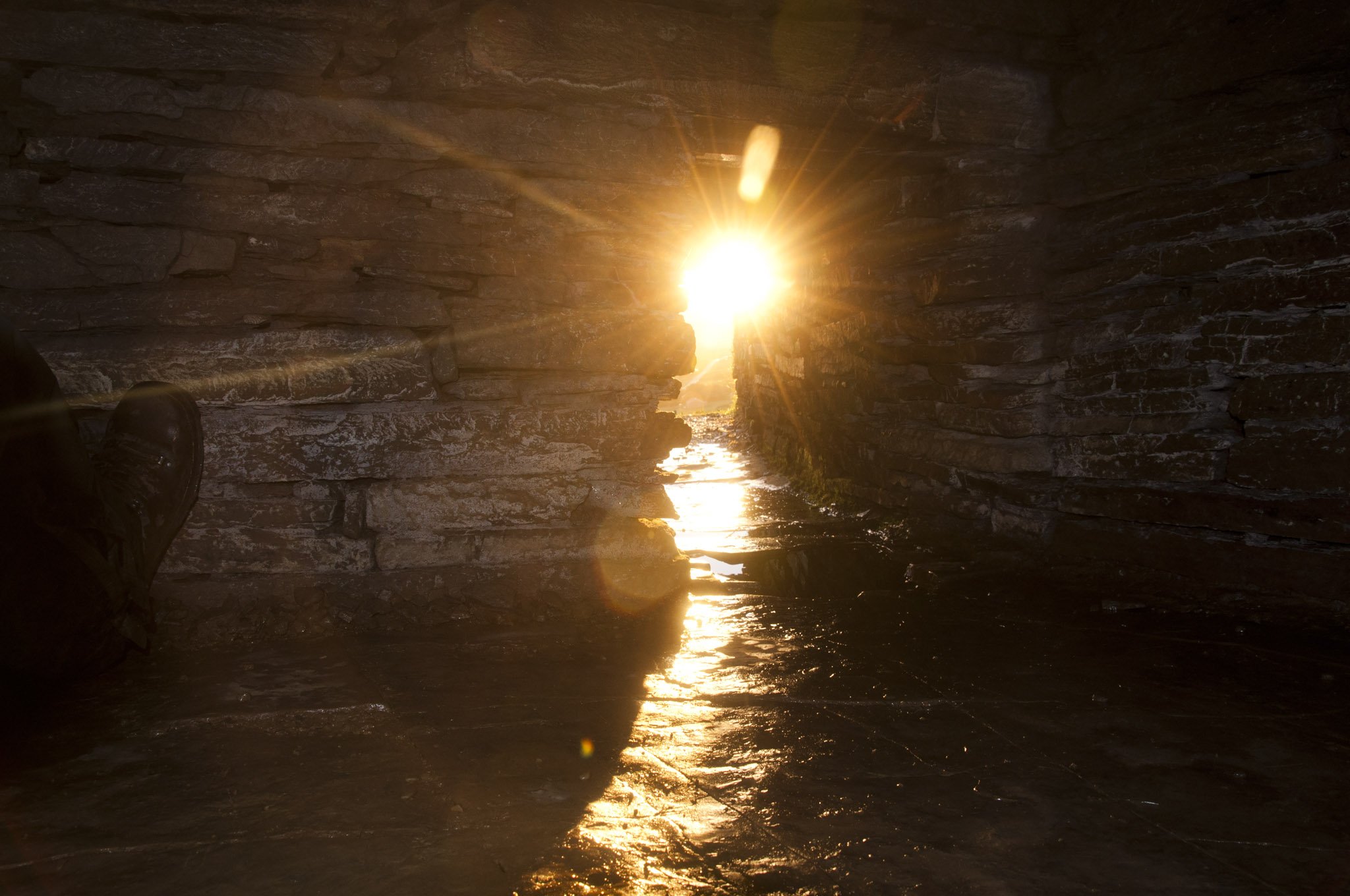
‘Archaeo-optics’ is a research collaboration between me, Ronnie Scott, and Matt Gatton. Since 2012 I have conducted experimental fieldwork at numerous Neolithic chambered monuments, revealing that these spaces can generate moving, colourful optical projections reminiscent of cinematography.
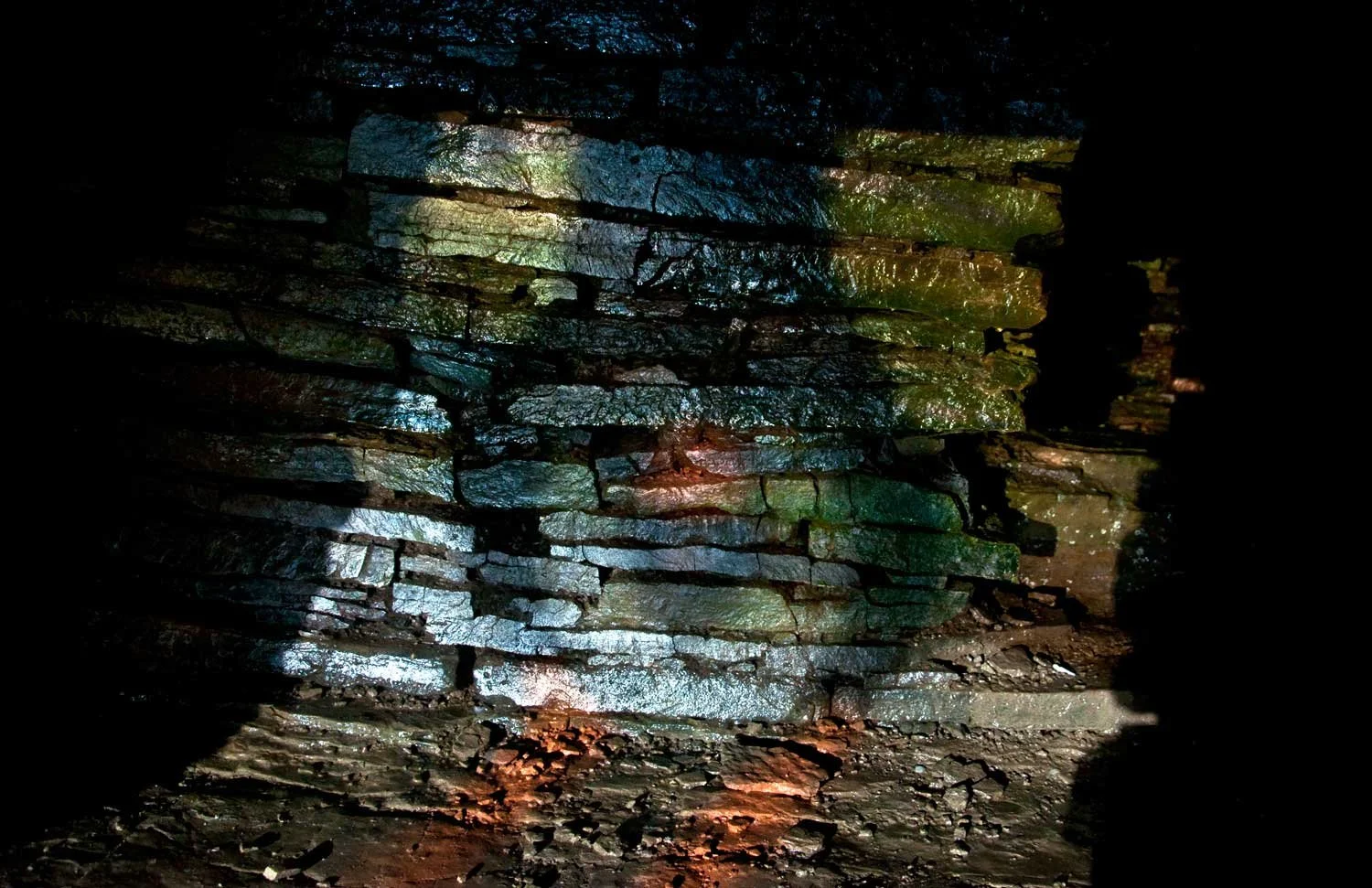
A remarkable variety of dynamic effects have been observed and, where possible, recorded: beams of light, blazing orbs, spectral figures, and luminous animated images of landscapes and people.
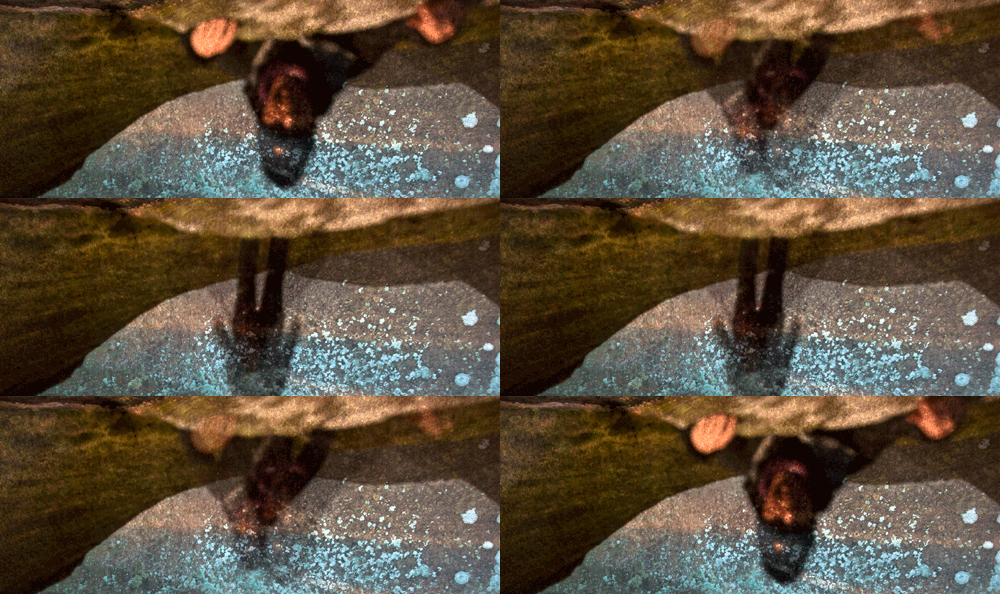
Optical projections inside the Dwarfie Stane, Orkney
Passage Graves
Passage graves are particularly effective venues for optical projections because their architecture reproduces the fundamental format of a camera obscura. Restricted single entrances govern the movement of light so precisely that only minimal refinements are required to produce visible images. Some monuments even retain built-in features that may have served this purpose. In other cases, the effect can be recreated using an opaque screen punctured with a small hole—an aperture.
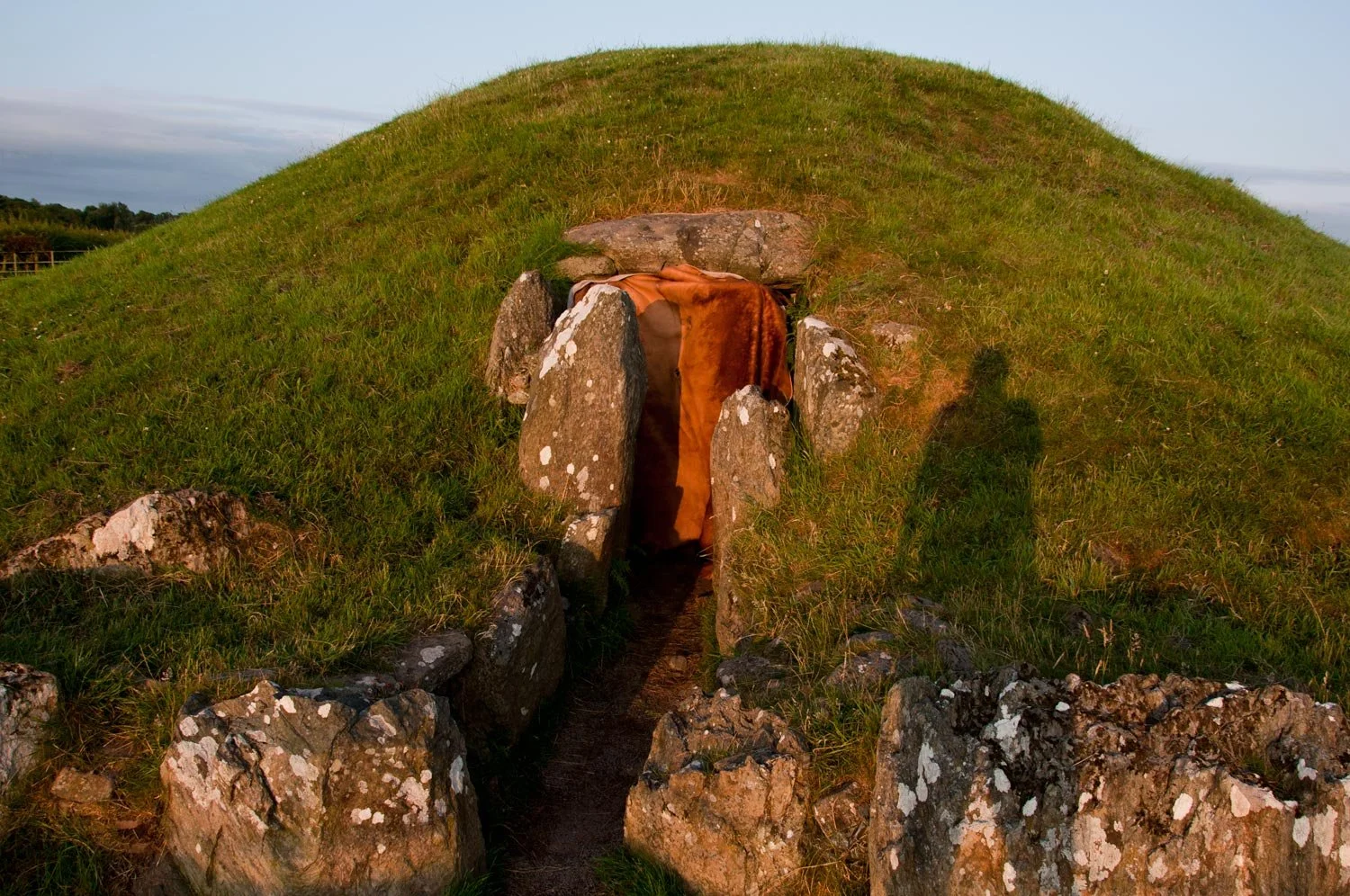
An animal skin being used as an aperture screen during fieldwork at Bryn Celli Ddu, 2015. Photo: Aaron Watson
By adjusting the diameter of the aperture or its distance from the wall where the projection appears, the image’s character—its size, brightness, and focus—can be finely controlled. The long, dark chambers of these monuments provide ideal conditions for witnessing such projections, while extended passages allow for precise manipulation of the optical effects. As with all camera obscura images, the resulting projections appear upside down and reversed back to front.
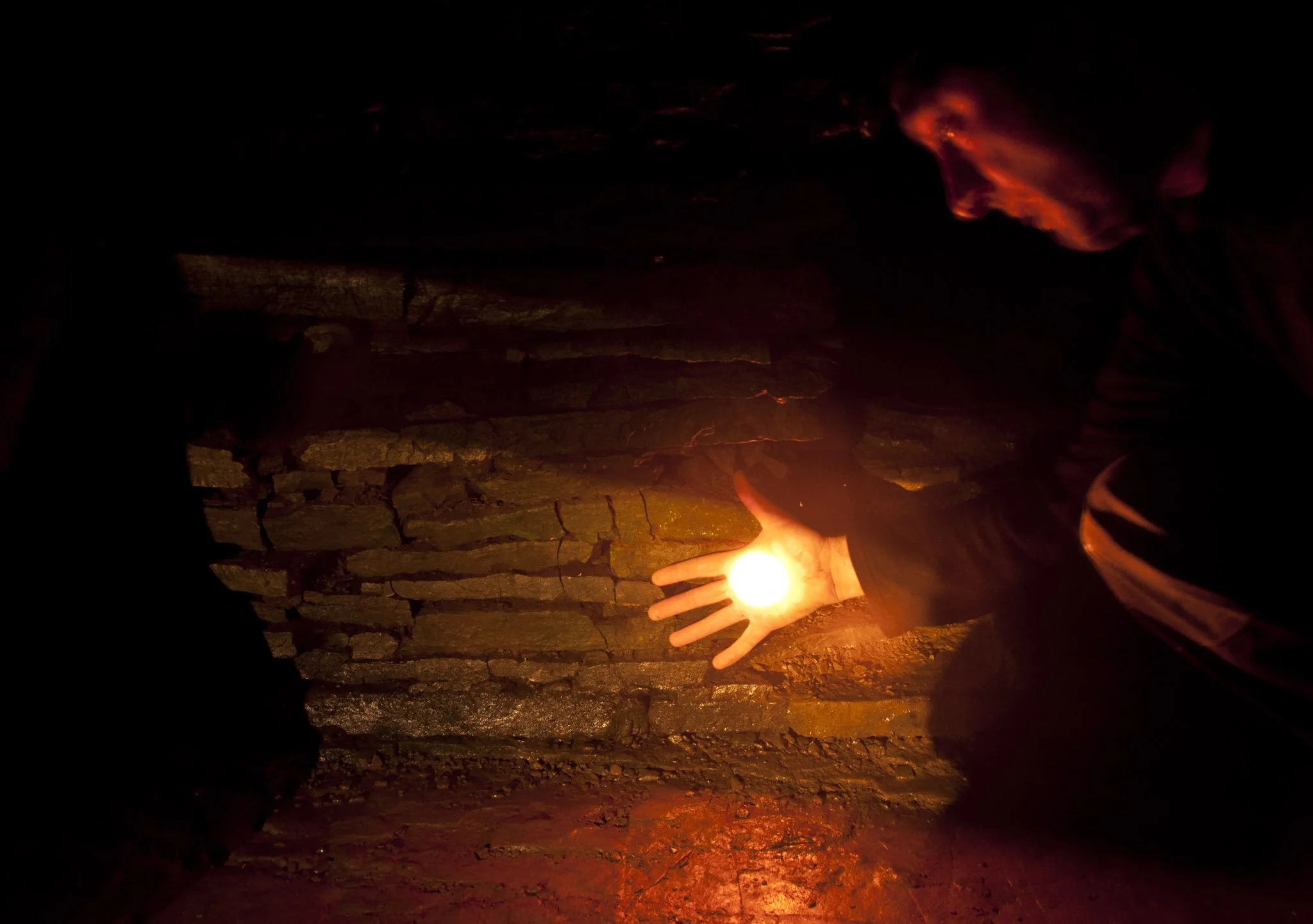
An enlarged optical projection of the sun’s disc inside Bryn Celli Ddu, Anglesey, during midsummer sunrise, 2015. Photo: Aaron Watson
An inverted human figure projected upon the back wall of the chamber at Cuween Hill during fieldwork, 2015. Photo: Aaron Watson
Conclusions:
What optical projections may have meant in the Neolithic
While these projections are striking today, Aaron is particularly interested in how Neolithic people might have understood and engaged with them. Without modern scientific knowledge, they would have interpreted these extraordinary effects through their own cultural and symbolic frameworks.
Archaeologists now see passage graves as potent liminal spaces, where people engaged with alternative dimensions and journeys between life and death. Optical projections could have enhanced these experiences, making such meanings more vivid, tangible, and powerful. Together with archaeoacoustic phenomena, these monuments would have offered truly extraordinary sensory experiences.
Find out more about sensory experiences visit >
Fieldwork and research sites
Fieldwork and Research Sites
Since 2012, archaeo-optic investigations have been carried out at monuments including Bryn Celli Ddu, Cuween Hill, Wideford Hill, Vinquoy Hill, Dwarfie Stane, and the Grey Cairns of Camster. Research is ongoing, and further findings will be shared on this site as the work progresses.
Further reading
Watson, Aaron and Scott, Ronnie. 2022. Materialising Light, Making Worlds: Image projection within the megalithic passage tombs of Britain and Ireland”. In Constantinos Papadopoulos and Graeme Earl (eds.) The Oxford Handbook of Light in Archaeology. Oxford: Oxford University Press.
Links to additional information:
Palaeo-Camera
Matt Gatton's wide-ranging and fascinating research into the use and meaning of optical projections throughout time, from the present day to the Palaeolithic:
> http://paleo-camera.com